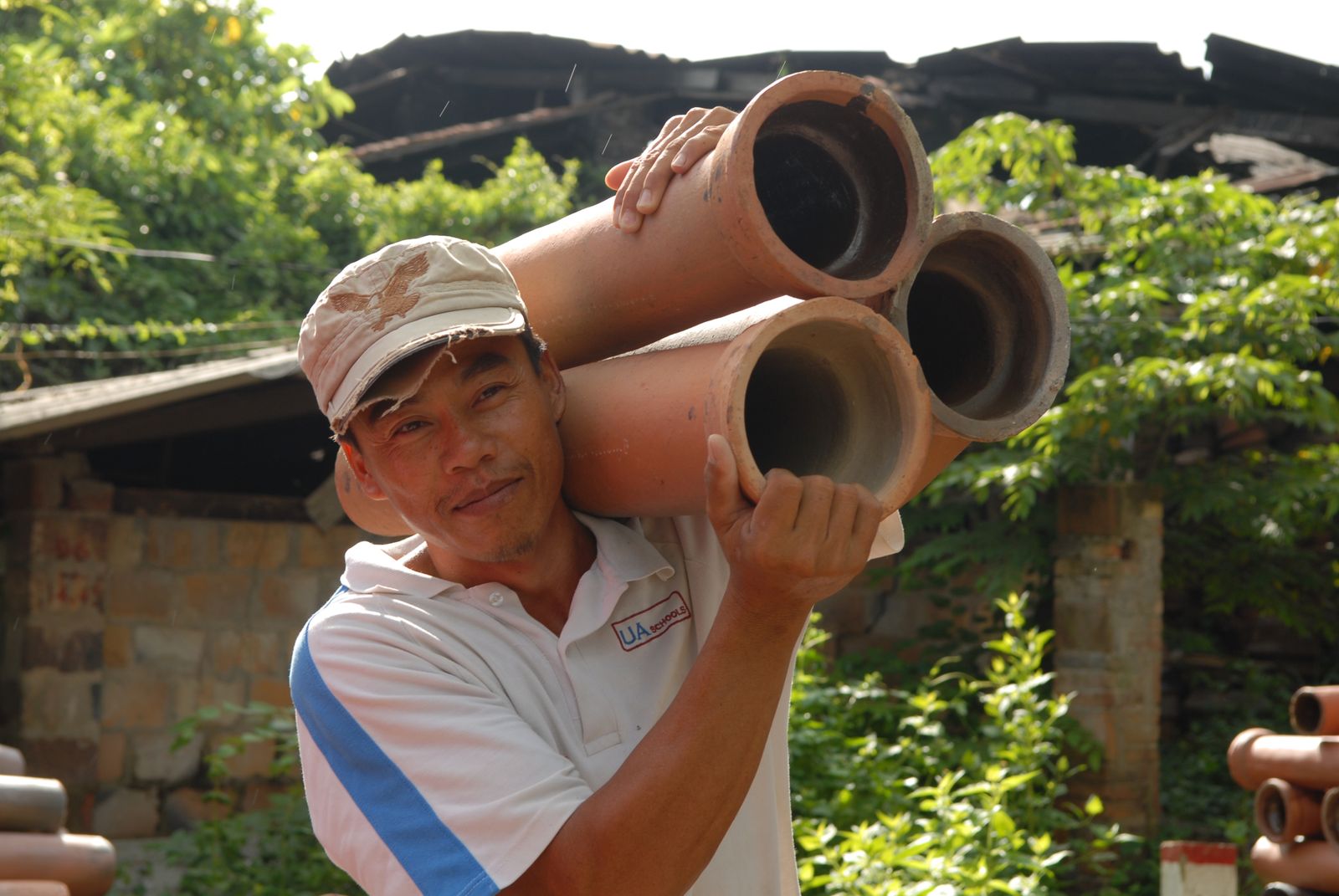
Under a lot of Stanton yards sits a sewer lateral older than the people living in the house. Clay, cast iron and, in some tracts, Orangeburg did their job for decades, and they are now the pipes most likely to crack, shift and fill with roots.
We connect Stanton homeowners with experienced local sewer pros who deal with these older materials every week. Call, describe the symptoms, and you will hear what clay sewer pipe replacement in Stanton involves and whether a smaller repair might be enough.
Clay sewer pipe replacement means swapping old fired-clay sections of the lateral for new pipe. This page explains how the older materials fail, what the options are and how the choice gets made.
Which pipe materials were used in Stanton homes, by era
Nobody can read the pipe from the surface, but the age of a house gives a first guess. These are general tendencies, and your camera video is what identifies your actual pipe.
| Material | Where it tends to turn up | How it tends to fail | What the camera shows |
|---|---|---|---|
| Vitrified clay | Older homes, from the earliest lots through the 1950s and 1960s tracts | Cracks, open or shifted joints, root entry | Short sections with many seams, roots at the joints |
| Cast iron | Some mid-century homes, often near the house | Rust scale narrowing the pipe, a thinning wall | A rough, scaled interior and rust buildup |
| Orangeburg (bituminized fiber) | Possible in some postwar tracts | Softening, flattening, collapse | A pipe that looks out of round or layered |
| ABS and PVC | Newer homes and complexes, and most repairs today | Damage from movement or poor connections | A smooth, uniform interior with few joints |
How clay and cast iron sewer pipe fail over time
Clay is made in short sections, so a lateral has many joints, and every joint is a place for roots, shifting soil or a slight offset to cause trouble. Cracks come from ground movement and loads above the line. A section that settles can leave a sag where water sits and waste collects.
Cast iron fails more quietly. Rust scale builds up inside, narrowing the pipe until clogs become a habit, and the wall can thin until it cracks or breaks. Orangeburg is a different story. It is a fiber pipe that can soften, flatten and collapse, which is why a line of it is often the first one a pro wants to see on camera.
None of these failures happens on a schedule. No one can read a lifespan off a house's age, and nobody should quote one. If roots are involved, the tree roots in sewer line page covers what happens when they cause repeat clogs.
Spot repair, lining or full replacement
A spot repair replaces one bad section, such as a broken joint or a collapsed stretch, and leaves the rest of the pipe alone. It suits a line that is otherwise sound.
Lining creates a new pipe inside the old one without digging up its whole length, and it works on a pipe that is still continuous and in line. A line with sags, collapses or severe offsets usually cannot take it, and the trenchless sewer repair page explains the fit criteria.
Full replacement swaps the whole run, either by digging or by pipe bursting. It makes sense when the damage is widespread or when a repair would only move the weak spot a few feet down the line. The camera video decides, and the pro lays out the options with the upfront price before work begins.
Old sewer pipe replacement: what goes in the ground today
Most replacement laterals today are plastic, typically ABS or PVC, joined with tight, well-made connections. Compared with short clay sections, a plastic run has far fewer joints, which leaves roots fewer places to try. Pipe bursting often draws in a continuous plastic pipe.
New pipe does not remove every future risk. A poorly bedded pipe can still sag, and a damaged connection can still leak. Ask the pro how the new line will be supported and whether a cleanout will be added, because access makes every later visit easier. The sewer cleanout installation page explains why.
Orangeburg pipe replacement and old clay lines on a typical Stanton lot
Stanton's postwar tracts are mostly single-story homes with no HOA, with the lateral running from the house across the front or side yard to the street. In these neighborhoods, a visit for sewer line repair near Hollenbeck Park often turns up clay with root intrusion, and Orangeburg is possible in some tracts.
Older single-story tract homes around Fern Avenue and Dotson Park tend to have mature trees, driveways and block walls along the line, which is why sewer line repair near Dotson Park often turns on what can be moved and what cannot. Replacement may mean opening a trench in the lawn, a pit near the house or both.
The ground is flat, with no hillsides, so the line should run on a gentle, steady fall. In gated townhome communities and mobile home parks, a lateral may be private or HOA-managed, and work there needs the owner or manager on board. These are tendencies by era and layout, not promises about any one yard.
Buying or selling a home with an older sewer line
An older lateral is not a reason to walk away from a house, but it is a reason to look before you sign. A sewer scope before buying a house shows what the pipe is made of, where it is damaged and how urgent it is.
Sellers can use the same tool. A scope done before listing means no surprises in the middle of a sale, and it lets you decide whether to repair first or disclose and negotiate. Some places have point-of-sale rules about laterals, so check current local requirements with the city rather than assuming. Nothing here is legal advice.