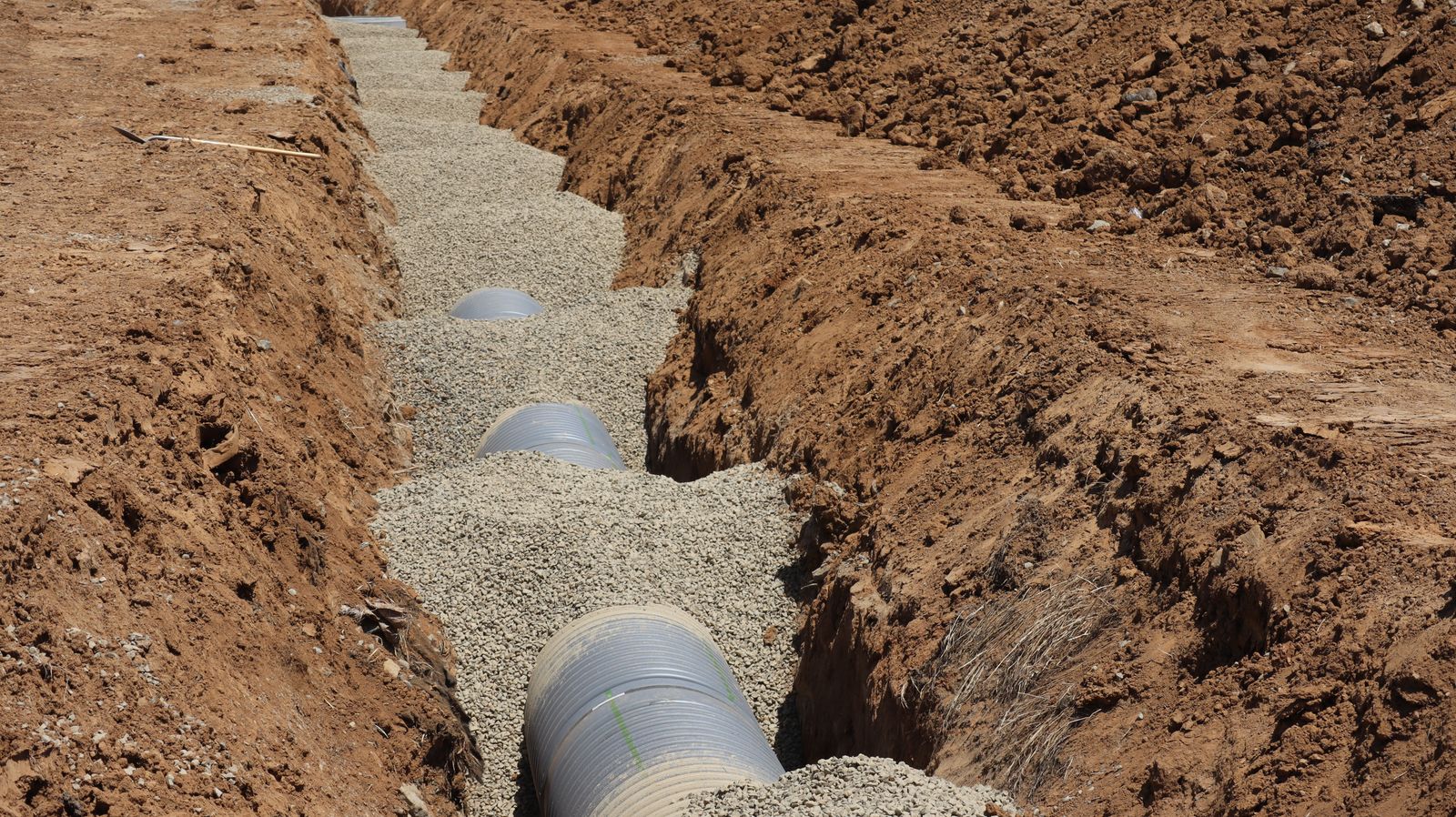
A cracked or root-filled sewer lateral is stressful enough without picturing a trench through the driveway, the lawn and the tree you planted years ago. Trenchless methods exist for exactly that worry, and Stanton homeowners ask about them often.
We connect Stanton homes with experienced local sewer pros who work with trenchless and open-trench repairs alike, so the advice follows your pipe instead of a sales preference. Describe what is happening on a call, and you will hear straight away whether trenchless sewer repair is worth looking at for your line.
Below is what trenchless sewer repair in Stanton covers, how the two main methods differ, and what has to be true about a pipe before anyone recommends either one. Trenchless work is sometimes sold as no-dig sewer repair, although small access pits are still needed. Pipe bursting sewer line work, the second method, replaces the old pipe instead of lining it.
What trenchless means for a sewer lateral
Trenchless is a family of methods that repair or replace a buried pipe without digging up its whole length. The crew opens a few small access points, often starting at an existing cleanout, and works through the old pipe itself.
The pipe in question is the building sewer, also called the sewer lateral. It runs from the house to the public main, and it is usually the homeowner's responsibility, though the split varies by place, so check with your city or sewer provider for how it works at your address.
Two methods do most of the work: cured-in-place lining and pipe bursting. Neither is magic, and both start with a camera.
Sewer pipe lining vs pipe bursting for a sewer line
Lining puts a resin-soaked tube into the cleaned old pipe, presses it against the walls and lets it harden. The result is a new pipe inside the old one. It follows the path the old pipe already takes, so it suits a line that is still continuous and mostly straight, with cracks, open joints or places where roots get in.
Pipe bursting works differently. A cone-shaped head is pulled through the old pipe, breaking it outward into the surrounding soil while new pipe is drawn in behind it. It can replace a pipe that is too damaged to line, but it needs an entry pit, an exit pit and a clear picture of what else is buried nearby.
| Lining | Pipe bursting | Open trench | |
|---|---|---|---|
| What happens | A new pipe is formed inside the old one | The old pipe is broken outward and new pipe replaces it | The old pipe is dug out and new pipe is laid |
| Where digging happens | Small access points | An entry pit and an exit pit | Along the whole line |
| Often a good fit | Continuous pipe with cracks, open joints or root entry | Pipe too damaged to line, on a clear path | Sags, collapses and sharp bends |
| Often a poor fit | Sagging, collapsed or badly offset pipe | Crowded buried lines nearby | Lines under a driveway, patio or tree you want to keep |
| What it needs from the camera | A full, clear path to follow | A known route and depth | An exact location of the damage |
If your line has roots in it, the tree roots in sewer line page explains what cutting them does and does not fix, which often decides whether lining is on the table.
When trenchless sewer repair in Stanton is a good fit, and when it is not
Trenchless tends to work well on a pipe that is still in one piece and following its original route. Think cracks, open joints and root entry points on a lateral that runs under a driveway, a patio or a mature tree.
It tends to struggle when the pipe has lost its shape. A sag, sometimes called a belly, holds water, and a liner follows the sag instead of removing it. A collapsed section can block the path a liner or burst head needs. A severe offset or a tight bend can stop the tools in their tracks.
Honest advice sometimes lands on digging, and that is fine. Trenchless is not always possible, and it is not automatically cheaper. A pro who tells you that before the work starts is a pro worth listening to.
Access points: cleanouts and small pits
Trenchless work needs a way in. The easiest is an existing cleanout, the capped pipe that gives a technician direct access to the lateral. Many older homes do not have one, so adding one can be part of the job.
Where there is no good access, the crew opens a small pit at a chosen spot, usually near the house or near the edge of the property. How large it needs to be depends on how deep the line runs and which method is used, and the pro explains where each pit goes before any digging begins.
Driveways, mature trees and hardscape on Stanton lots
For trenchless sewer repair in Stanton, the lot often matters as much as the pipe. Stanton homes were built in layers, and each layer changes what is in the way. In the old Benedict streets around Zuniga Park, small irregular lots leave little room for a trench, which is why sewer line repair in Benedict Tract so often turns to access pits and lining questions first.
The postwar tracts of the 1950s and 1960s, mostly single-story homes with no HOA, usually have driveways, block walls and mature trees between the house and the street. In the Western Avenue park area, mid-century homes and apartments sit side by side, and sewer line repair near Stanton Central Park often starts with sorting out which line belongs to which building.
Along Beach Boulevard, Katella and Knott Avenues, many mobile home parks and gated townhome communities have lines that may be private or managed by an HOA. Any work there needs the owner or manager on board first. These are tendencies, not promises about any one house.
What the camera has to show before anyone recommends lining
No honest recommendation comes before the video. A sewer camera inspection shows whether the line is continuous, where it bends, whether it sags, and how much root growth or buildup sits inside. Locating the line from the surface adds its route and depth.
A line that keeps backing up may need clearing before the camera can pass, and a sewer backup in progress comes first. Once the picture is clear, the pro lays out the options, from a spot repair to lining to bursting to digging, with the upfront price explained before work begins.